top of page


All Posts


Demystifying the Medium: What Makes Watercolor Different from Other Mediums?
If you've painted with acrylics or oils before, watercolor will surprise you. It doesn't behave like other paints, and that's exactly why beginners either fall in love with it or walk away frustrated. Here's what sets it apart. Exploring the Differences: How is watercolor different from oil, and acrylic paint Water Is the Medium, Not Just a Tool In acrylic or oil, water or solvent thins the paint but stays in the background. In watercolor, water is the paint. How much you us

Em Campbell
Aug 64 min read
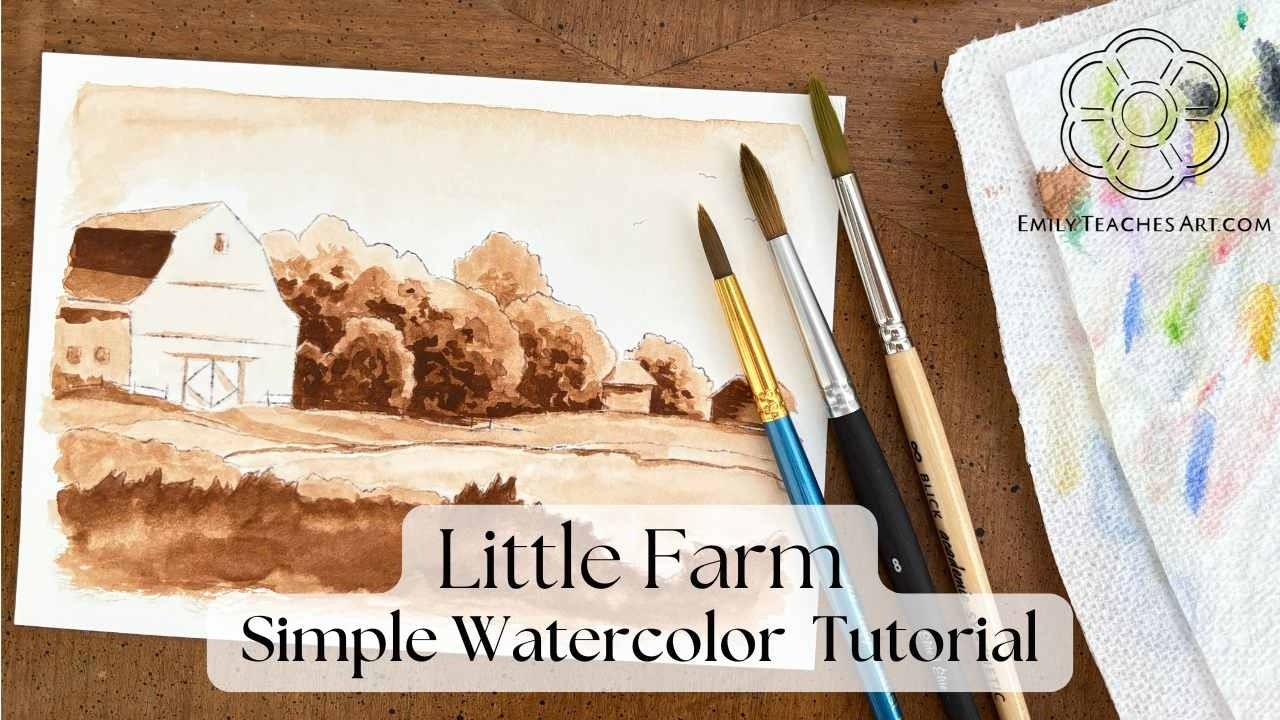
Tutorial: Watercolor Farm Landscape
Follow along with me as we paint a little farm in monochrome. This is a great project for beginner and intermediate watercolor artists who want to sharpen your sense of value and contrast. Materials van Dyke Brown watercolor paint round watercolor brush size 6 white paper towel 5x7in watercolor paper 140lb cold press with inkjet printed sketch This sketch prints as a double - two on one page - so you can practice extra or try something new with the other sketch. You can downl
Em Campbell
Jul 61 min read


What is in my Plein Air Watercolor Kit for Travel (and why)
You’re hiking in beautiful Switzerland, the weather is perfect, the view is majestic - especially that friendly goat. You want to remember this moment, so you pull out your painting kit, and settle into the soft grass for a lovely hour of savoring and saving the landscape through art. This moment sounds absolutely ideal, and yet there is one element in it that could move this dream to a nightmare quickly, and it’s not the goat. Or the grass… unless you have allergies. When yo
Em Campbell
May 247 min read

Tutorial: Northern Lights in Watercolor
Learn how to preserve or create white in this northern lights watercolor tutorial featuring cute polar bears! I've sketched them out already for you if you'd like to print it at home. See the link below! Though the sound quality isn't great, this full-length lesson is still simple and flexible. Follow along slowly, pause as often as you'd like, or move through it at a quicker pace by speeding up the video if you prefer. Links in this post will take you directly to the product
Em Campbell
May 142 min read


8 Ways to Improve Your Watercolor Paintings
Watercolor is beautiful, expressive, and... sometimes frustrating. The good news is that improvement doesn’t come from buying more supplies or having “natural talent.” It comes from understanding a few key habits and practicing them consistently. Here are eight practical ways to grow your watercolor skills. Learn to control your water Water is the real medium in watercolor. Practice mixing different water-to-paint ratios (often described as tea, milk, and cream). Lighter wash
Em Campbell
Apr 272 min read


10 Watercolor Supplies Beginners Should Skip (And What to Use or Do Instead)
Walking into an art supply store as a beginner watercolor painter can feel overwhelming. The options are endless, the price tags vary widely, and it’s hard to know what you really need versus what’s just clever marketing. The good news? You need a lot less than you think. Here are ten things beginners commonly buy that they’d be better off skipping if your goal is to truly learn the skill of painting with watercolors. Links in this post will take you directly to the products
Em Campbell
Apr 24 min read


The Smart Watercolor Beginner's Supply List
There’s no shortage of advice on what you “need” to start watercolor painting—different paper types and weights, spiral pads versus blocks, tubes versus pans, and an endless array of brushes in mysterious sizes. It’s enough to make anyone feel overwhelmed, whether you’re just starting out or picking the craft back up again. So what do you actually need as a beginner? The honest answer is: it depends. Your goals as a painter matter far more than any universal supply list. Are
Em Campbell
Mar 305 min read

Tutorial: Cherry Blossoms, A Watercolor Tutorial for Beginners
These soft cherry blossoms will teach you much about controlling wet-into-wet, timing your layering, and how to glaze two complimentary colors to create the most interesting brown. This 33-minute full-length lesson is clear and flexible. Follow along slowly, or move through it at a quicker pace by speeding up the video if you prefer. Materials round brush size 8 smaller detail brush larger brush that holds more water white paper towel 8x10in watercolor paper 140lb cold press
Em Campbell
Mar 291 min read


The Art of Painting What Isn't There: Understanding Negative Painting in Watercolor
Most painters learn to work from the inside out. You see a flower, you paint the flower. You see a tree, you paint the tree. It's intuitive, direct, and for many other mediums, perfectly logical. But watercolor has its own logic — and one of its most powerful techniques turns that instinct completely on its head. Negative painting is the practice of defining a shape not by painting it, but by painting around it. Instead of applying color to a leaf, you paint the shadow and sp
Em Campbell
Mar 243 min read
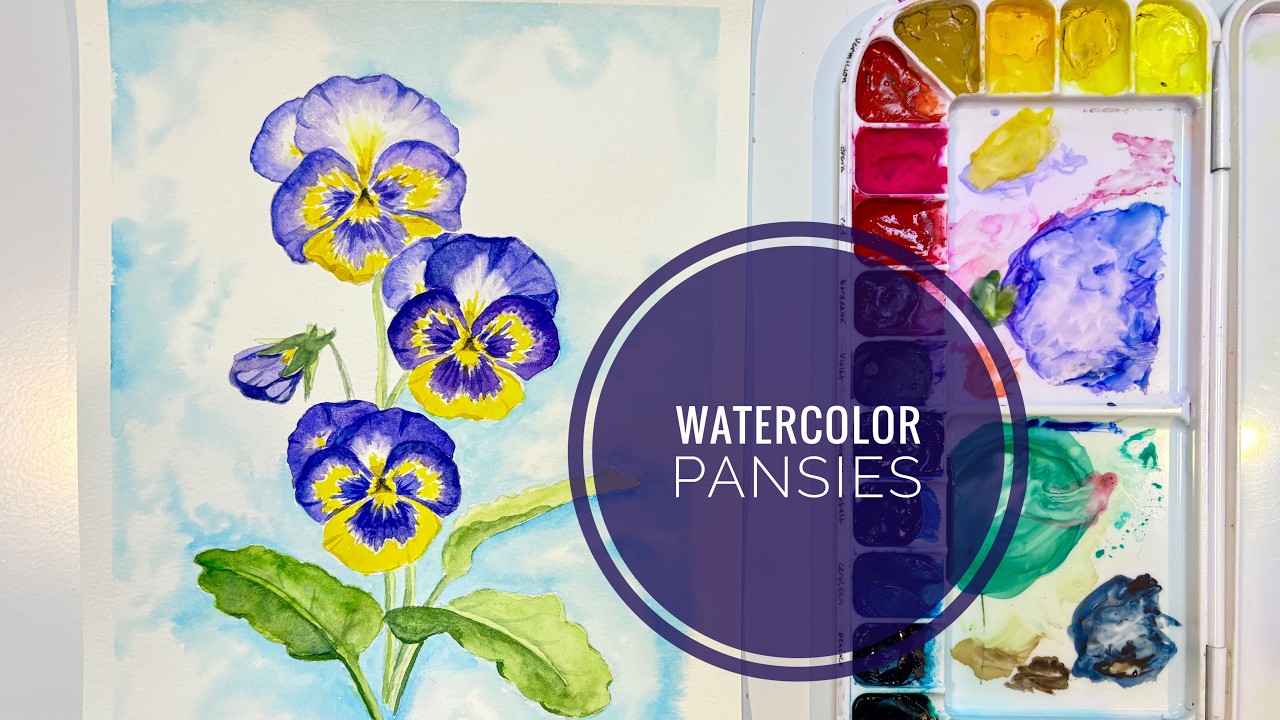
Tutorial: Pansies, A Watercolor Tutorial for Intermediate Painters
Pansies are a great subject for developing control and confidence in watercolor. This step-by-step tutorial is designed for intermediate watercolor painters and focuses on how to paint complimentary colors without creating mud, and how to add a soft, wet-on-wet background to an existing artwork. You’ll work on shaping each petal with careful strokes, blending smooth transitions, and preserving light areas to keep the flower luminous. These techniques carry over well into othe
Em Campbell
Mar 181 min read


8 Healthy Practices For New Artists To Start Now!
Starting out as a painter is exciting—and a little overwhelming. Whether you’re working in watercolor, acrylic, or mixed media, the habits you build early will shape your skills, confidence, and even your ability to earn income from your art. If you’re a new painter, these 7 practices will help you grow creatively, stay healthy, and set a strong foundation for the long haul. 1. Paint Regularly (Consistency Beats Talent) You don’t need to paint every day, but you do need consi
Em Campbell
Mar 173 min read


From Muddy to Magical: Color Theory for Watercolor, A Beginner's Guide
Color is one of the most powerful tools you have as a watercolor painter. It shapes mood, directs attention, creates depth, and helps tell a story. Even the simplest subject can feel expressive and alive when color is used intentionally. If you’re new to watercolor, understanding color theory will immediately improve your paintings. Let’s break it down in a simple, practical way. Why Color Matters Color does more than make a painting “pretty.” It helps you: Establish mood and
Em Campbell
Mar 125 min read


Oops! Fix These Common Watercolor Painting Mistakes
Watercolor painting can be magical—but it’s also easy to make mistakes. The good news? Most “oops” moments can be fixed or even turned into something beautiful. If you’re looking for ways to improve your watercolor painting outcomes, here’s a simple guide to help you correct common watercolor mishaps. 1. Unwanted Edges or Blooms Sometimes water flows into a drying area, creating hard lines or “cauliflower” blooms. Fix it: Let the paper dry completely before touching it. Re-we
Em Campbell
Mar 13 min read

Watercolor Tutorial: Lavender in Mason Jar Intermediate Watercolor Lesson
If you’re looking for a watercolor tutorial that helps you grow your skills, this mason jar lesson is a perfect challenge to take on. Designed for beginner to intermediate watercolor painters, this step-by-step tutorial focuses on layering techniques, lifting pigment, and learning how to paint realistic light and transparent glass. You’ll discover how to build depth with transparent washes, create glowing highlights, and control values to make a simple mason jar feel three-di
Em Campbell
Feb 261 min read


How to Work with White in Watercolor: Essential Techniques for Beginners (and why I don't like masking fluid)
If you're new to watercolor painting, you’ve probably already discovered one of the medium’s most important quirks: there’s no white paint in traditional watercolor. Unlike acrylics or oils, watercolor relies on the white of your paper to create light values and highlights. This fundamental difference changes everything about how you approach a painting. Learning to preserve and create white is one of the most critical watercolor painting techniques for beginners to master. W
Em Campbell
Feb 245 min read


Wet-Into-Wet Watercolor Technique: A Beginner-Friendly Guide
Wet-into-wet is one of the most beautiful—and misunderstood—watercolor techniques. When it works, the results feel loose, luminous, and alive. When it doesn’t, beginners often feel like the paint has a mind of its own. If you’re learning watercolor in Maryland or anywhere else, understanding timing and water control is the key to making wet-into-wet work for you instead of against you. Wet-Into-Wet Wet-into-wet (or Wet-on-wet) is a watercolor technique where wet paint is ap
Em Campbell
Feb 232 min read


Why Every Watercolor Artist Should Make Color Swatches
If you’re learning watercolor, one of the simplest but most powerful ways to set yourself up well is by making color swatches of your palette. Artists of all levels, from beginners to experienced painters, use swatches to understand color behavior, improve mixing, and speed up their workflow. Here are the benefits of creating color swatches... Understand Your Colors Better Every watercolor brand and pigment behaves differently. Making swatches lets you see: • True color on pa
Em Campbell
Feb 52 min read


Watercolor Washes: How to Paint Flat and Gradient Backgrounds (Beginner Guide)
Learning to paint clean, beautiful washes is one of the most important skills in watercolor. Flat and gradient washes form the foundation and background for many paintings. When these washes are smooth, everything layered on top looks better. If you’re learning watercolor, mastering these two wash types will beautifully improve your paintings—no matter what you like to paint. What Is a Watercolor Wash? A wash is a broad, even application of diluted paint across the paper. Was
Em Campbell
Feb 13 min read


Extra Watercolor Supplies: Get to Know Your Supplies Series
Okay, we covered the big ones already, now let's look at all the extra watercolor supplies one might need to get started. Now listen, y'all...These are my own recommendations, you might not find all these to be helpful to you, or you may think I've left an essential tool out. Tell me! Comment below your best tools and share the knowledge! Links in this post will take you directly to the products I'm recommending, and if you purchase the item, I will get a tiny percentage of t
Em Campbell
Jan 303 min read


How to Master Water-to-Paint Ratios in Watercolor Painting: Tea, Milk, Cream Method
In watercolor painting, the “water-to-paint” ratio is one of the main ways to control transparency, intensity, and texture. In other words, it's REALLY important to master! Using terms like “tea,” “milk,” and “cream” is a helpful way to think about it. Imagine a saucer of each liquid, how do they act when you tip the saucer side to side? Can you see through the liquid? How much does it move? Mastering the right water-to-paint ratio in watercolor painting takes good observatio
Em Campbell
Jan 282 min read
bottom of page