top of page


Watercolor Techniques
Learn the basics of watercolor and beyond with these blog posts about a variety of watercolor skills and techniques for beginners and intermediate painters.
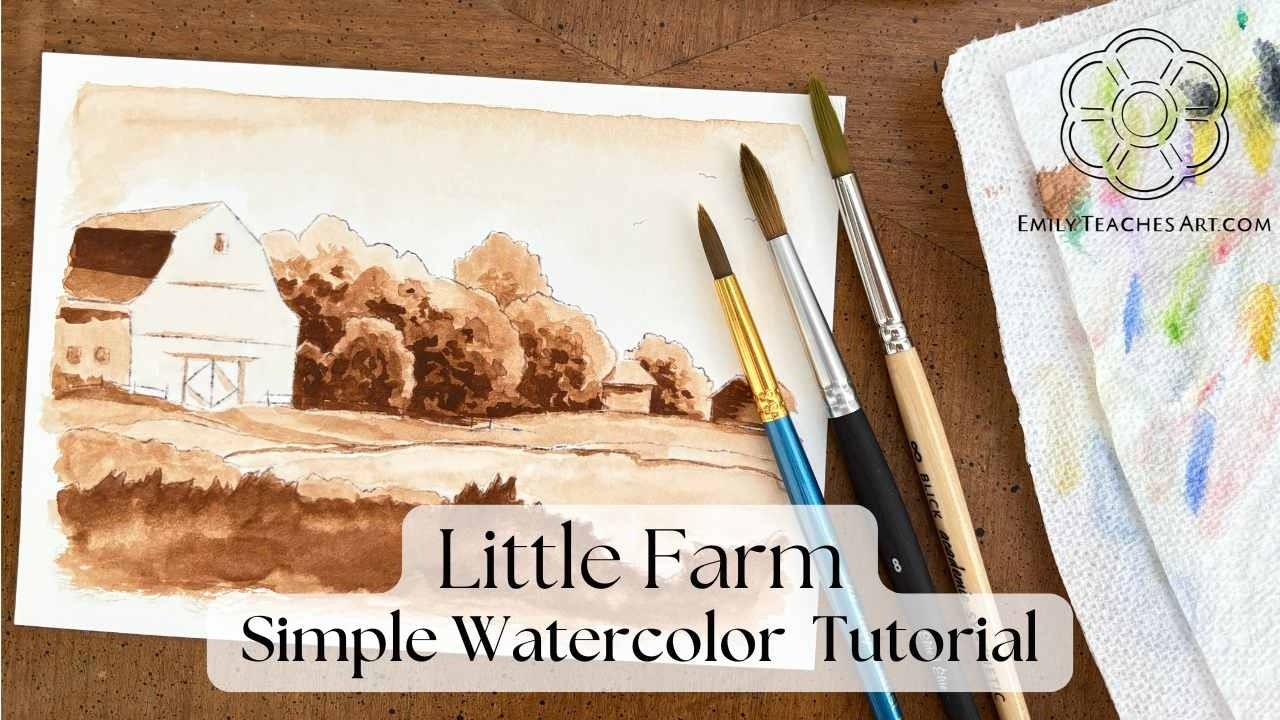
Tutorial: Watercolor Farm Landscape
Follow along with me as we paint a little farm in monochrome. This is a great project for beginner and intermediate watercolor artists who want to sharpen your sense of value and contrast. Materials van Dyke Brown watercolor paint round watercolor brush size 6 white paper towel 5x7in watercolor paper 140lb cold press with inkjet printed sketch This sketch prints as a double - two on one page - so you can practice extra or try something new with the other sketch. You can downl

Em Campbell
Jul 61 min read


8 Ways to Improve Your Watercolor Paintings
Watercolor is beautiful, expressive, and... sometimes frustrating. The good news is that improvement doesn’t come from buying more supplies or having “natural talent.” It comes from understanding a few key habits and practicing them consistently. Here are eight practical ways to grow your watercolor skills. Learn to control your water Water is the real medium in watercolor. Practice mixing different water-to-paint ratios (often described as tea, milk, and cream). Lighter wash
Em Campbell
Apr 272 min read


The Art of Painting What Isn't There: Understanding Negative Painting in Watercolor
Most painters learn to work from the inside out. You see a flower, you paint the flower. You see a tree, you paint the tree. It's intuitive, direct, and for many other mediums, perfectly logical. But watercolor has its own logic — and one of its most powerful techniques turns that instinct completely on its head. Negative painting is the practice of defining a shape not by painting it, but by painting around it. Instead of applying color to a leaf, you paint the shadow and sp
Em Campbell
Mar 243 min read


From Muddy to Magical: Color Theory for Watercolor, A Beginner's Guide
Color is one of the most powerful tools you have as a watercolor painter. It shapes mood, directs attention, creates depth, and helps tell a story. Even the simplest subject can feel expressive and alive when color is used intentionally. If you’re new to watercolor, understanding color theory will immediately improve your paintings. Let’s break it down in a simple, practical way. Why Color Matters Color does more than make a painting “pretty.” It helps you: Establish mood and
Em Campbell
Mar 125 min read


Wet-Into-Wet Watercolor Technique: A Beginner-Friendly Guide
Wet-into-wet is one of the most beautiful (and maybe misunderstood) watercolor techniques. When it works, the results feel magical. When it doesn’t, beginners often feel like the paint has a mind of its own, and that mind wants to make mud. If you’re learning watercolor in Maryland or anywhere else, understanding timing and water control is the key to making wet-into-wet work for you instead of against you. Wet-Into-Wet What Is the Wet-Into-Wet Technique? Wet-into-wet simply
Em Campbell
Feb 232 min read


Watercolor Washes: How to Paint Flat and Gradient Backgrounds (Beginner Guide)
Learning to paint clean, beautiful washes is one of the most important skills in watercolor. Flat and gradient washes form the foundation and background for many paintings. When these washes are smooth, everything layered on top looks better. If you’re learning watercolor, mastering these two wash types will beautifully improve your paintings—no matter what you like to paint. What Is a Watercolor Wash? A wash is a broad, even application of diluted paint across the paper. Was
Em Campbell
Feb 13 min read


How to Master Water-to-Paint Ratios in Watercolor Painting: Tea, Milk, Cream Method
In watercolor painting, the “water-to-paint” ratio is one of the main ways to control transparency, intensity, and texture. In other words, it's REALLY important to master! Using terms like “tea,” “milk,” and “cream” is a helpful way to think about it. Imagine a saucer of each liquid, how do they act when you tip the saucer side to side? Can you see through the liquid? How much does it move? Mastering the right water-to-paint ratio in watercolor painting takes good observatio
Em Campbell
Jan 282 min read
bottom of page