

Demystifying the Medium: What Makes Watercolor Different from Other Mediums?

If you've painted with acrylics or oils before, watercolor will surprise you. It doesn't behave like other paints, and that's exactly why beginners either fall in love with it or walk away frustrated. Here's what sets it apart.
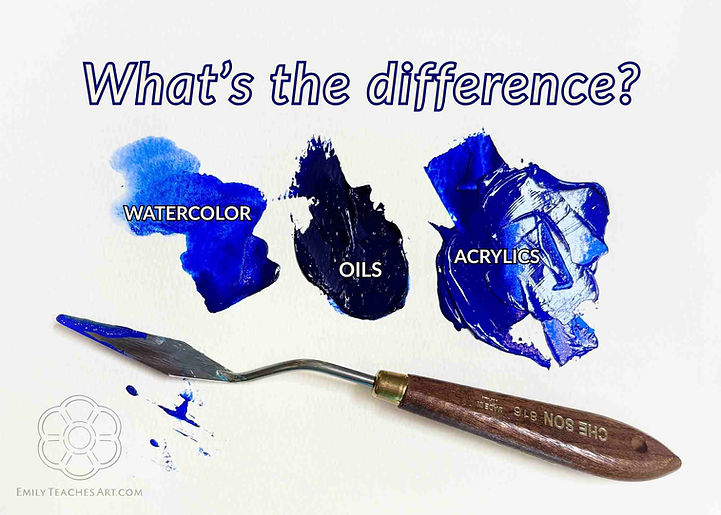
Water Is the Medium, Not Just a Tool
In acrylic or oil, water or solvent thins the paint but stays in the background. In watercolor, water is the paint. How much you use, how fast it dries, and how it moves across the paper determines the outcome as much as the pigment does. You're not just controlling color or texture, you're attempting to control a very fluid liquid.
Transparency Instead of Coverage
Acrylic and oil are typically opaque (meaning you can't see through them). With these mediums can often paint a light color right over a dark one and cover it completely. Watercolor is transparent. Light passes through the pigment, bounces off the white paper, and comes back through the paint again. That's where its glow comes from. It also means mistakes don't disappear under a second coat the way they do with oil or acrylic paint. This doesn't mean you can't fix mistakes, but it's a whole different way to think about coverage.
You Work Light to Dark
Because watercolor is transparent, you can't paint white on top of color. White comes from the paper itself. This flips the usual painting process: instead of building shadows on top of a base, you plan ahead and preserve the lightest areas from the very first stroke. Beginners coming from acrylic or oil may want to reach for white watercolor to fix this or add back lost white, but this isn't the watercolor way. Watercolor painting is best executed with proactive thinking rather than reactive.
Drying Time Changes the Rules
Acrylics dry very fast, sometimes too fast. Oil paint can take months to fully dry. Watercolor dries quickly, often in minutes depending on humidity and paper, but remains workable. That speed and flexibility mean that you can finish a small painting in one sitting or on the go. But it also means edges and blends happen in a narrow window of time. Wait too long and a smooth wash turns into a hard, unwanted line or a color stain seeped into the paper. Dry time is something that newbies should pay close attention to but not be discouraged if they don't grasp immediately. Just like all skills, will come with time and practice.
Paper Matters More Than People Expect
In oil and acrylic, canvas is fairly forgiving - you can paint with these on many different surfaces. In watercolor, the paper is doing real work. Its weight and texture control how the water spreads, how long it stays wet, and how the pigment settles. A cheap pad (made from tree cellulose) and a professional cold press paper (100% cotton) will produce genuinely different paintings from the same brushstrokes. This is often where newbies think they're terrible painters. Try switching to better paper and see the difference. Here are three brands I like that won't break the bank - Fabriano and Baohong are good for everything, and Meeden is good for practice. Cold press vs hot press? If you're a beginner, go for cold, it's the most versatile. What You Gain
So is it worth the hassle? Of course! None of this should scare a painter off from watercolor. There are real advantages to the medium. For one, it's the most portable painting medium there is: a small travel set, a water brush, and paper fit in a pocket. It's easy to clean up in a minute or two. If you've used oil or acrylics you know how much of an advantage this is! It's cheap, fast, and safe. There's no solvent smell, no waiting days for a layer to cure, no expensive setup. It's magical. Colors mix on the paper in ways you can't fully predict or replicate in acrylic or oil, which gives watercolor paintings a uniqueness and mystery that's hard to fake. It's rewarding. Because a piece can be finished in one sitting, you get to see real progress fast instead of returning to the same painting for weeks. It's a medium that sharpens artistic skills like color mixing, planning, and quick decision-making, which is part of why so many painters who start in watercolor never fully leave it, even after learning other techniques and mediums. So don't be intimidated by watercolor's difference; embrace the unpredictability and newness and you'll grow quickly as an artist.
If you're just starting out, don't judge the medium by your first few paintings. The learning curve may be steeper than acrylic or oil, but it flattens quickly once you understand these differences instead of fighting them. If you want to know what supplies to use as a newbie, you can find all my recommended supplies here or you check out this post on essentials or this post on what to avoid.
Happy painting! - Em


Comments